Expert care for every chapter of a woman's life.
From the first trimester to menopause and beyond, Mint Wellbeing’s specialist Women’s Health team offers the most comprehensive, evidence-based physiotherapy in South London. We combine deep clinical expertise with advanced diagnostic technology to understand your body, not just your symptoms.
Specialist care for every chapter of a woman's life
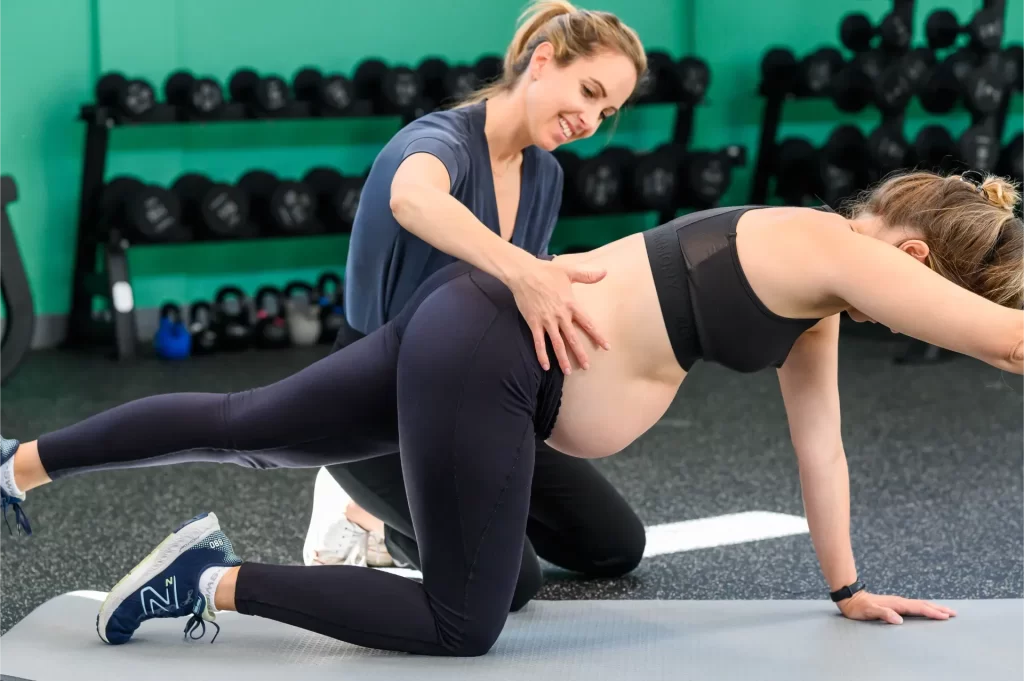
At Mint Wellbeing, our specialist Women’s Health Physiotherapists support women through every stage of life. That might be pregnancy or postnatal recovery, changes that come with menopause, pelvic pain, bladder and bowel problems, or pain during sex. Whatever has brought you to us, you’ll find expert assessment, an individualised treatment plan and care built around you.
Every member of our Pelvic Health team holds postgraduate qualifications in Women’s and Pelvic Health and undertakes regular specialist training to ensure they are up to date with the latest research and evidence-based practice.
Many symptoms women are told to accept as normal are often highly treatable. We aim to help you better understand your body, regain confidence in it, and feel more like yourself again.
The time and space to understand you
A lot of the conditions we treat are ones women have been quietly living with for a long time. Leaking when you run. Pain that has been put down to “just how things are”. A prolapse diagnosis that came with very little guidance about what to do next or bowel symptoms you have never mentioned to anyone.
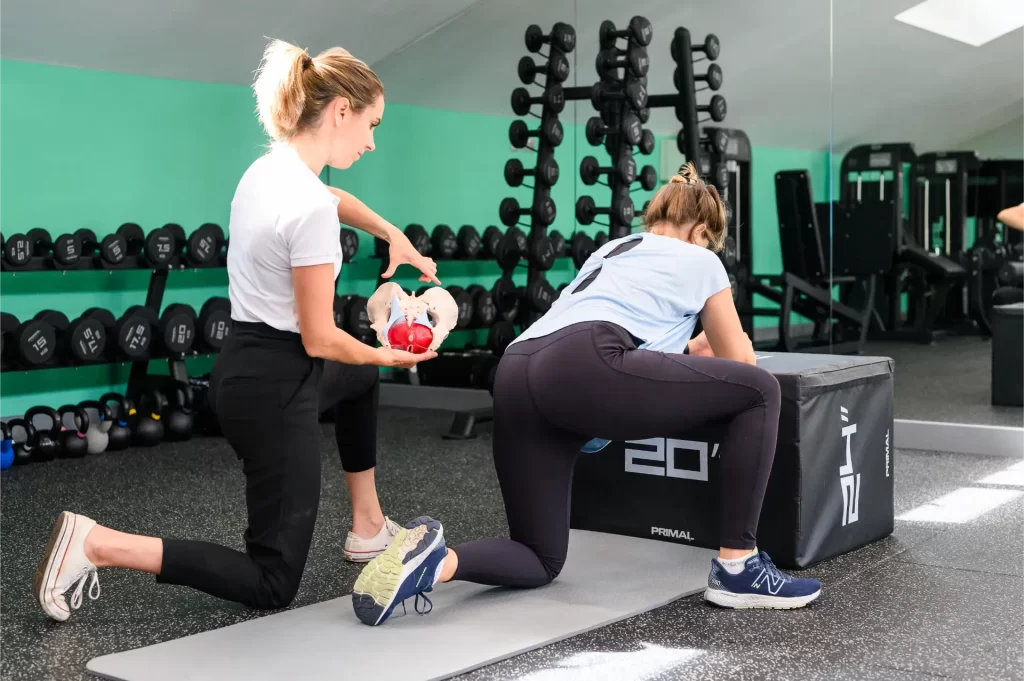
We pride ourselves on taking the time to explore not just your symptoms, but understand your history, your daily life and what you want to get back to. These could be hobbies, activities, or just being able to feel active and strong around your children and family.
Our team works collaboratively with gynaecologists, urogynaecologists, colorectal surgeons and midwives across South London and Surrey ensuring an MDT when required.
Explore our Women’s Health Services
FAQs
What is prenatal physiotherapy?
Prenatal physiotherapy involves regular checks and assessments of key areas like the pelvic floor and abdominals during pregnancy.
We offer advice and education on correct exercises and techniques, tailored to individual needs. Our treatment program helps address specific issues, manage musculoskeletal pain, and prepare for childbirth with techniques like perineal massage.
What is included in a post natal physiotherapy check up?
Our postnatal check up is an appointment designed to assess your stage of recovery following birth and guide your return to your goals (be that not pee-ing when you stand up, cough or sneeze or running a marathon!). The appointment is designed to teach you about your new body, educate you on how to improve your function as well as understanding your new normal.
The session is 1 hour long and includes;
- A full history of your pregnancies, births, recoveries, health conditions, menstruation and past surgery
- A discussion about your pelvic floor including urination, bowel opening, sexual intercourse and pain or discomfort
- A discussion about your challenges, symptoms and goals
- A review of your posture and pelvic position
- Assessment of your spine, hips, upper back and pelvis
- An internal examination of your pelvic floor to assess; muscle tone and strength, prolapse, risk of prolapse, pain, tightness and scar tissue. The nature of this examination will be fully explained to you by your therapist and carried out by a Women’s Health Specific Physiotherapist with post-graduate training on the pelvic floor.
- A hands on assessment of your abdominal wall (to check for diastasis)
- An ultrasound examination of your abdominal wall to assess the linea alba (fascia connecting your abdominal muscles) and to teach you how to effectively contract your lower abdominal muscles
- An assessment of your scar and education around scar massage (c-section or vaginal tear)
- An individualised plan for your pelvic floor, abdominal wall and return to your goals
Following the session your therapist will discuss with you if there is any ongoing need for further appointments and give you guidance on the next steps.
Even if you are over 1 year postnatal this appointment is still suitable for you! Anyone who has had a baby at any point in the past and wants to learn to understand their new body better can benefit from a women’s health assessment.
What is a pelvic floor examination and do I have to have one?gn residential spaces?
A pelvic floor examination is an assessment technique used by qualified healthcare professionals to examine the vulva, vagina and muscles of your pelvic floor, the position of your pelvic organs and to better understand your muscle strength and tone. This requires using a gloved finger internally to palpate the muscles and vaginal wall to ensure correct diagnosis and subsequent treatment plan. Your therapist will fully explain the procedure, the need for the examination and the alternatives. They will ensure to gain your full consent and you may decline the assessment or discontinue at any time.
What is a standing pelvic floor examination?
Almost all of our clients notice their pelvic floor symptoms when doing tasks in an upright position (coughing / jumping / running / weight lifting). A standing pelvic floor assessment can help you assess your pelvic floor function against gravity, assess your pelvic floor coordination with tasks, assess your ability to manage load through the pelvic floor and is a great way to progress your rehab to a more functional activity. Generally a lying assessment is carried first.
Can I still have a pelvic floor check on my period?
A pelvic floor examination can still occur during menstruation – in fact often our clients are more symptomatic at this time and therefore assessing in that phase can help us understand even better what is going on. As long as you are comfortable then there is no reason to need to reschedule your appointment.
Please note that for some individuals the first or second day of your menstrual cycle you may have heavier flow and elements of the examination may be carried out at a subsequent session. If you are uncomfortable with having the assessment during this time please contact the team. We can assess using ultrasound instead or we can arrange for a rescheduled appointment. We totally understand.
Do I need a pelvic floor exam after C-section or just vaginal birth?
Many women experience pelvic floor issues following a caesarean birth. They can result following hormonal changes, stress or strain to the pelvic floor during pregnancy or from muscular coordination changes postnatally. Commonly women may notice discomfort with sexual intercourse or changes in their bladder frequency and urgency. Generally we carry out a pelvic floor examination (with full informed consent) during all postnatal appointments to assess and guide treatment.
I have urinary leaking and heaviness but I am only 3 weeks postpartum - can I come to Physiotherapy?
Absolutely, whilst many women will have some symptoms in the first few weeks postnatally, you certainly do not need to suffer these without help. Although we will not carry out a full internal examination until 6 weeks postnatal, we can assess externally, give guidance and education and start on a treatment program. Additionally we can screen for any concerning symptoms and refer on as required.
I am 4 years postpartum but still have symptoms - can I have a postnatal check?
Yes – absolutely. Whether you are 6 weeks, 6 months or 6 years postnatal – this appointment is still totally suitable for anyone who has had a baby at any point in the past and wants to learn to understand their new body better. Whether that be related to symptoms, feeling weak or just wanting to get back to exercise and not knowing where to start – we can help you!
My doctor told me I can return to all exercise and running at 6 weeks - is that true?
The 6 week medical check is generally not a sign off for intense exercise. The medical check is commonly checking if there is any medical reason why you should not return to exercise. However – just like after an ankle sprain – every individual’s birth and recovery is different and an individual assessment of your pelvic floor, core and pelvis is recommended before returning to intense exercise.
As a general rule running (a high impact) exercise is recommended from around 3 months postnatal providing you have no symptoms, good pelvic floor recovery and good single leg strength. As part of our return to running program we provide a lying and standing pelvic floor examination and follow a return to run guideline to help you determine when you are ready.
What our patients say

I saw Amy for physio after shoulder surgery, and she was amazing! Amy tailored each session and genuinely cared throughout my recovery. The clinic itself was excellent. It was really comfortable, well-equipped, and welcoming.
Jay Barclay
This place is excellent! I’ve been doing post natal rehab and return to strength here for last 4 months and it’s just a fantastic place. Candice who trains the mum and baby restore classes is excellent!